
What Are Weak Oral Muscles (Hypotonia of the Facial and Jaw Muscles)?
Parents often seek professional help when they notice excessive drooling, feeding or chewing difficulties, or delayed speech development. One possible underlying cause is hypotonia of the facial and jaw muscles, commonly referred to as weak oral muscles.
Weak oral muscles (hypotonia) refer to reduced strength, muscle tone, or coordination of the lips, cheeks, tongue, and jaw. These muscles play a vital role in feeding, chewing, swallowing, and speech development.
When these muscles are weak or poorly coordinated, children may experience:
- difficulty closing their lips and moving the jaw effectively
- excessive drooling
- difficulties with chewing and swallowing
- unclear articulation of certain speech sounds
- delayed speech development
What Is Orofacial Stimulation and Massage?
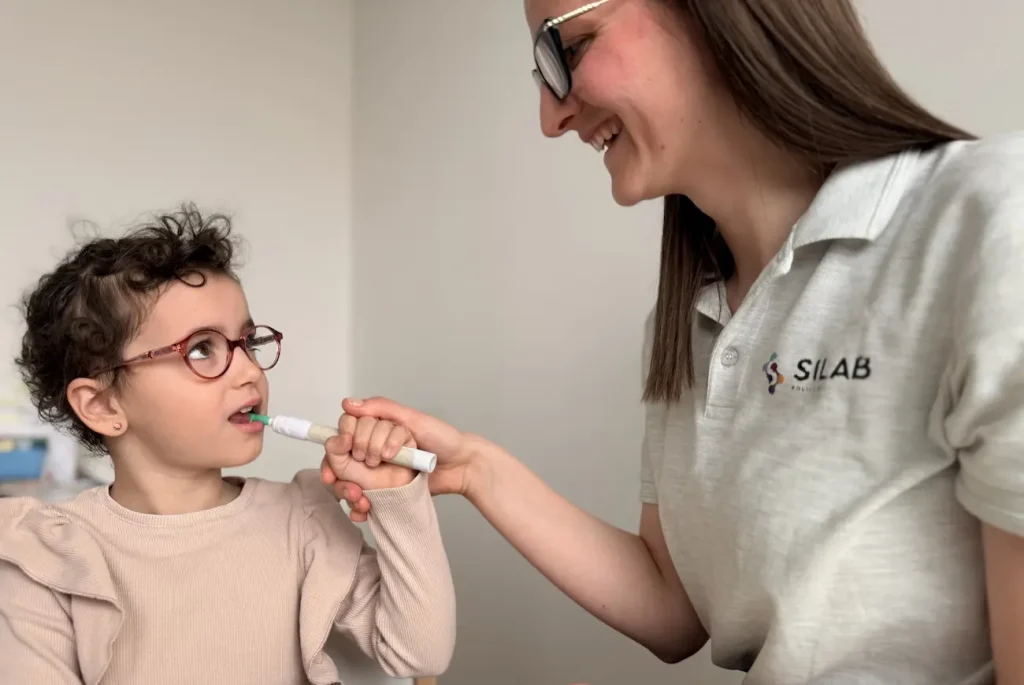
Orofacial massage is a gentle therapeutic technique designed to strengthen the muscles of the lips, cheeks, tongue, and jaw. It is performed by a trained professional and always tailored to the child’s age and individual needs.
At Poliklinika SILAB in Zagreb, we combine orofacial stimulation with TalkTools© techniques and equipment to help strengthen oral muscles and improve feeding and speech-related functions.
The goals of orofacial therapy include:
- improving oral awareness and control of movements around the mouth
- increasing muscle tone
- improving coordination of movements required for feeding and speech
- supporting healthy breathing patterns and nervous system regulation
Therapy is often combined with additional orofacial exercises to help children gradually develop proper movement patterns of the lips, tongue, and jaw.
Who Can Benefit from Orofacial Therapy?
Orofacial stimulation is particularly beneficial for children who have:
- weak oral muscles (hypotonia)
- excessive drooling
- feeding difficulties – including refusal of certain food textures
- articulation and speech sound difficulties
- delayed speech development
With regular and consistent therapy, children may:
- improve lip closure
- gain better control of tongue movements
- improve swallowing and feeding skills
- develop clearer and more understandable speech
Why Is Early Intervention Important?
The earlier orofacial therapy begins, the better the potential outcomes. A child’s brain has a remarkable ability to adapt and learn new skills, which is why early intervention and consistency in therapy can make a significant difference in speech development, feeding abilities, and overall development.
If you notice any difficulties in your child, consulting a specialist is the first and most important step.
Frequently Asked Questions (FAQ)
1. Who can benefit from orofacial stimulation?
Orofacial stimulation is intended for children with neurodevelopmental difficulties, feeding challenges, and delayed speech development. It may also benefit adults recovering from a stroke, individuals with neurological conditions, and those experiencing temporomandibular joint (TMJ) disorders.
2. Is orofacial therapy painful?
No. Orofacial stimulation and massage are performed using gentle and controlled techniques, and therapy is always tailored to the individual’s age, needs, and condition.
3. Who provides orofacial stimulation therapy?
Orofacial stimulation is typically provided by trained professionals, including speech and language therapists, occupational therapists, physiotherapists, and special education and rehabilitation specialists.
4. How often is orofacial therapy provided?
Therapy is typically provided once or twice a week, combined with daily home exercises carried out according to the therapist’s recommendations.