Rehabilitation with Clear Goals and Measurable Progress
At SILAB, we provide robotic rehabilitation as part of a structured therapy process, combining physical therapy with robot-assisted rehabilitation to support faster, safer, and more effective recovery.
Our approach enables a higher number of quality repetitions, greater movement precision, and objective progress tracking throughout the rehabilitation journey.
Robotic technology is not a replacement for a therapist.
It is a tool that accelerates recovery, improves the precision of therapy, and provides clear insight into your progress.
How Does Robotic Rehabilitation Accelerate Recovery?
Compared to conventional physical therapy, robotic rehabilitation offers:
- a greater number of quality repetitions in less time
- precisely guided and controlled movements
- continuous insight into progress throughout therapy
- objective measurement and monitoring of outcomes
You are not simply performing exercises – you can clearly see and measure your progress throughout the entire rehabilitation process.
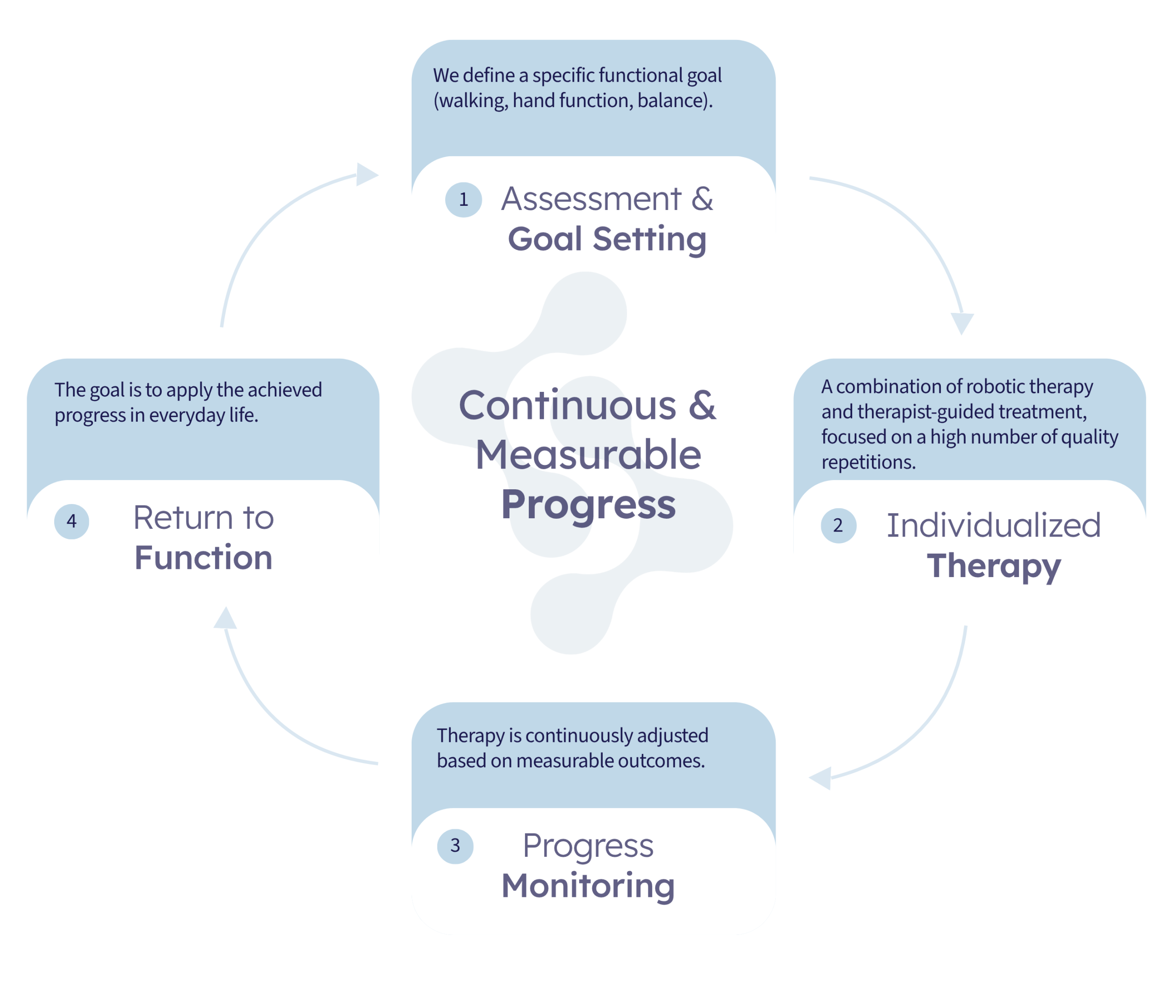
What Does the Rehabilitation Process Look Like?
Who Can Benefit from Robotic Rehabilitation?
Robotic rehabilitation is particularly effective for individuals with:
- stroke
- neurological impairments and hemiparesis
- nerve injuries
- post-operative recovery (hip, knee, spine)
- gait and balance disorders
- chronic pain and movement limitations
- developmental and neurological conditions in children
Why Do Patients Choose Robotic Rehabilitation?
Because it provides what matters most to patients:
- faster recovery
- visible and measurable progress
- a greater sense of control over therapy
- increased motivation
- confidence that their time is being used effectively
ROBOTIC THERAPY IN PRACTICE
Upper Extremities (Arm and Hand)
MYRO – Functional Hand Rehabilitation Through Task-Oriented Training
An interactive platform that combines motor and cognitive training through everyday-life activities.
How it helps:
- improves hand function
- enhances hand-eye coordination
- trains attention and reaction speed
- supports graphomotor skill development
PABLO – Precise Assessment and Movement Rehabilitation
A system for analysing movement, strength, and coordination using biofeedback and objective progress monitoring.
How it helps:
- hand and arm rehabilitation
- strength and movement training
- activities of daily living (ADL) training
- visible and measurable progress
Lower Extremities (Legs, Gait, and Balance)
OMEGO – Gait and Strength Rehabilitation
A device designed for gait, strength, and balance training throughout all stages of rehabilitation.
How it helps:
- improves walking ability
- strengthens leg muscles
- balance training
- faster recovery after surgery and injuries
TYMO – Balance and Body Control Training
A system for training balance, stability, and postural control with objective performance analysis.
How it helps:
- improves balance
- enhances body control
- increases movement stability
- supports safer walking
Single Session
If you would like to begin therapy or experience robotic rehabilitation, you can book an individual session.
Therapy Packages
Packages provide therapy continuity and improve the effectiveness of the rehabilitation process.
Frequently Asked Questions (FAQ)
1. How does robotic rehabilitation support recovery?
Yes. Robotic therapy is most effective when integrated into a comprehensive rehabilitation program. It is commonly combined with conventional physical therapy, occupational therapy, and other rehabilitation interventions. This combined approach allows patients to benefit from both advanced technology and the clinical expertise of their rehabilitation team, often leading to better functional outcomes and faster recovery.
2. Is robotic therapy a replacement for a therapist?
No. Robotic therapy is not a replacement for a therapist. It is a tool that enables therapists to deliver treatment with greater precision, improved control of movement, and objective, measurable outcomes.
3. Who is robotic rehabilitation intended for?
This therapy is particularly effective for individuals recovering from a stroke, nerve injuries, or orthopedic surgery involving the hip, knee, or spine. It is also beneficial for people experiencing gait and balance difficulties, chronic pain, as well as children with neurological or developmental conditions.
4. Are robotic rehabilitation devices safe for children and older adults?
Yes. All robotic rehabilitation devices used at SILAB are designed with safety and individualized treatment in mind. Therapy sessions are supervised by a qualified therapist and can be adjusted according to the patient’s age, condition, and functional abilities.
5. Can I combine robotic therapy with conventional physical therapy?
Yes. Robotic rehabilitation is designed to complement, not replace, conventional physical therapy. Combining both approaches often leads to faster progress, more precise therapy guidance, and improved rehabilitation outcomes.