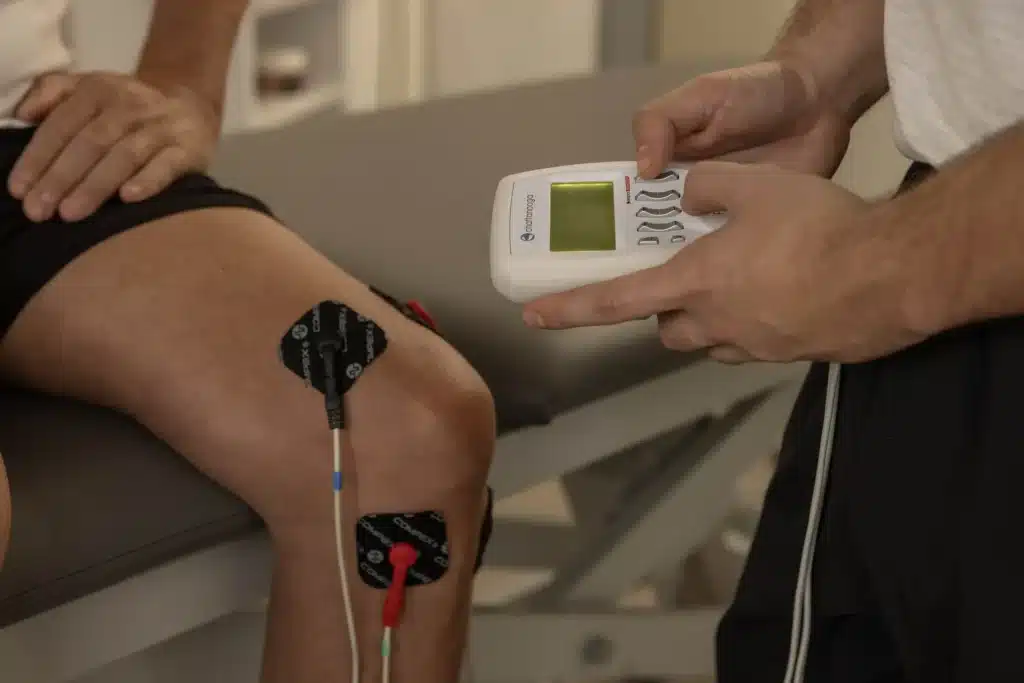

Hip surgery rehabilitation is essential for restoring mobility, independence, and quality of life. It most commonly follows hip replacement surgery (hip arthroplasty), one of the most frequently performed orthopedic procedures for advanced hip osteoarthritis (coxarthrosis), but it may also be required after hip fractures or other joint conditions.
Although surgery addresses the underlying cause of pain, successful recovery largely depends on a properly guided rehabilitation program. Without rehabilitation, patients may experience muscle weakness, limited mobility, and an unstable gait.
What Is Hip Surgery and When Is It Needed?
Hip surgery most commonly involves the implantation of an artificial joint – a hip prosthesis (hip replacement). It is typically performed when the cartilage within the joint has worn away, resulting in bone-on-bone contact, which causes pain and limits mobility.
The most common reasons for hip surgery include:
- advanced hip osteoarthritis (coxarthrosis)
- hip fractures
- avascular necrosis of the femoral head
- rheumatoid arthritis
Surgery is usually considered when conservative treatment options no longer provide adequate relief, including activity modification, targeted exercise programs, physiotherapy, medications, and walking aids.
How Long Does Rehabilitation After Hip Surgery Take?
The duration of rehabilitation depends on the patient’s condition and the type of procedure performed. In most cases, basic recovery takes approximately 6 to 12 weeks, while full functional recovery may require several months.
It is important to note that the absence of pain does not necessarily mean complete recovery. Strength, stability, and confidence in movement develop gradually over time.
What Does Rehabilitation After Hip Surgery Involve?
Rehabilitation is carried out through clearly defined stages that follow the healing process and the body’s adaptation to the new joint.
1. Acute Phase (First Days After Surgery)
During this phase, the primary focus is on safety and the prevention of complications.
The goals include reducing pain and swelling, preventing thrombosis, and promoting early mobilization.
Treatment typically includes breathing and circulation exercises, gentle isometric exercises, and activation of the quadriceps and gluteal muscles. Walking with assistive devices is introduced very early in the recovery process.
2. Early Phase (Weeks 2–6)
At this stage, the body begins to respond actively to therapy.
The goals are to improve hip mobility, gradually strengthen the muscles through controlled loading, and develop a proper walking pattern.
Rehabilitation includes progressive weight-bearing according to the surgeon’s recommendations, range-of-motion exercises, and strengthening of the surrounding musculature.
3. Intermediate Phase (Weeks 6–12)
The focus shifts to function and stability.
The goals are:
- strengthening the hip and leg muscles
- improving balance
- increasing endurance
Exercises may include balance training, progressive resistance exercises, stationary cycling, and functional movement patterns.
4. Late Phase (Months 3–6)
The final phase focuses on returning to everyday activities.
The goals are to achieve safe and stable walking, regain independence, and return to recreational activities.
Rehabilitation includes more intensive strengthening exercises, functional training, and activities tailored to the patient’s lifestyle and goals.
When Can I Walk After Hip Surgery?
Walking is introduced very early after surgery:
- with assistive devices – immediately after surgery
- partial weight-bearing – during the first few weeks
- independent walking – gradually, depending on recovery progress
Proper walking mechanics are essential for the long-term success of rehabilitation.
What Are the Best Exercises After Hip Surgery?
The most effective exercises are progressive and tailored to the specific stage of recovery. These typically include gluteal muscle activation, range-of-motion exercises, balance training, lower-limb strengthening exercises, and functional walking practice.
Returning to Daily Activities and Sports
The timeline for returning to activities depends on individual progress and overall condition. Most daily activities can be resumed within a few weeks, while recreational and sports activities are introduced gradually based on functional readiness and professional guidance.
Common Recovery Mistakes
- placing excessive load on the hip too early
- skipping rehabilitation sessions
- performing exercises incorrectly
- ignoring pain or swelling
What Is Important to Know About Hip Rehabilitation?
Rehabilitation after hip surgery is an individualized process that must follow the natural stages of healing and adaptation to the new joint.
Properly guided therapy helps restore safe walking, stability, independence, and overall quality of life.
Don't Delay Your Recovery!
If you are experiencing pain or limited mobility after shoulder surgery, timely rehabilitation can significantly accelerate recovery and improve long-term outcomes.
At our clinic, we create an individualized rehabilitation plan and guide you through every stage of the recovery process.
Contact us and start your rehabilitation on time.