Rehabilitation after knee surgery is a crucial step in restoring full function, stability, and quality of life. Regardless of the type of procedure performed, timely and professionally guided physiotherapy significantly reduces the risk of complications and supports a faster recovery.
Every patient requires an individualised approach, as the course of rehabilitation depends on the type of surgery, overall health condition, and level of physical activity prior to the procedure.
Most Common Knee Surgeries
Knee surgical procedures vary depending on the cause and severity of the condition or injury. The most common procedures include:
- Knee arthroscopy – a minimally invasive procedure used for the diagnosis and treatment of joint damage.
- Meniscectomy – the removal of the damaged portion of the meniscus.
- Meniscus repair – requires a longer recovery period but allows preservation of the meniscal structure.
- Total or partial knee replacement – performed in cases of advanced osteoarthritis.
- Cruciate ligament reconstruction (ACL/PCL) – commonly performed in athletes and physically active individuals.
- Osteotomy – a procedure used to correct bone alignment.
- Patellar surgery – performed to address instability of the kneecap.
- Multiple ligament reconstruction – used in more severe traumatic knee injuries.
When Is Knee Surgery Necessary?
The most common indications include:
- Degenerative joint changes (osteoarthritis)
- Ligament and meniscal injuries
- Traumatic knee injuries
- Chronic pain and joint instability
- Damage to the articular cartilage (joint cartilage)
Stages of Rehabilitation After Knee Surgery
The entire physiotherapy process should be professionally guided to ensure a safe and effective recovery.
1. Early Phase (The First Days After Surgery)
During this phase, the focus is on symptom control and the safe initiation of knee movement.
The main goals are to reduce pain and swelling, maintain joint mobility, and begin early mobilisation.
Treatment typically includes leg elevation, compression therapy, and cryotherapy (cold therapy).
Mobilisation usually begins on the first or second day after surgery under the guidance of a physiotherapist. During this phase, a Continuous Passive Motion (CPM) device is often used to help maintain and improve the range of motion in the knee joint.
2. Subacute Phase (Weeks 1–4)
This phase is particularly important, as the body begins to actively respond to rehabilitation.
The focus is on activating muscles without pain, reducing stiffness, and preventing contractures.
In addition to exercise, patient education plays an important role, including guidance on proper breathing, nutrition, and tissue healing.
An adequate intake of the following nutrients is recommended:
- Protein
- Omega-3 fatty acids
- Vitamins C and D
- Zinc
3. Functional Phase (Weeks 5–8)
During this phase, rehabilitation progresses to more active forms of exercise and weight-bearing activities.
The main goals are:
- Restoring the full range of motion
- Strengthening the muscles
- Improving knee stability
Exercises may include stair climbing, leg stretching exercises, and balance training.
The exercise programme is always part of an individualised physiotherapy plan tailored to the patient’s specific condition and rehabilitation goals.
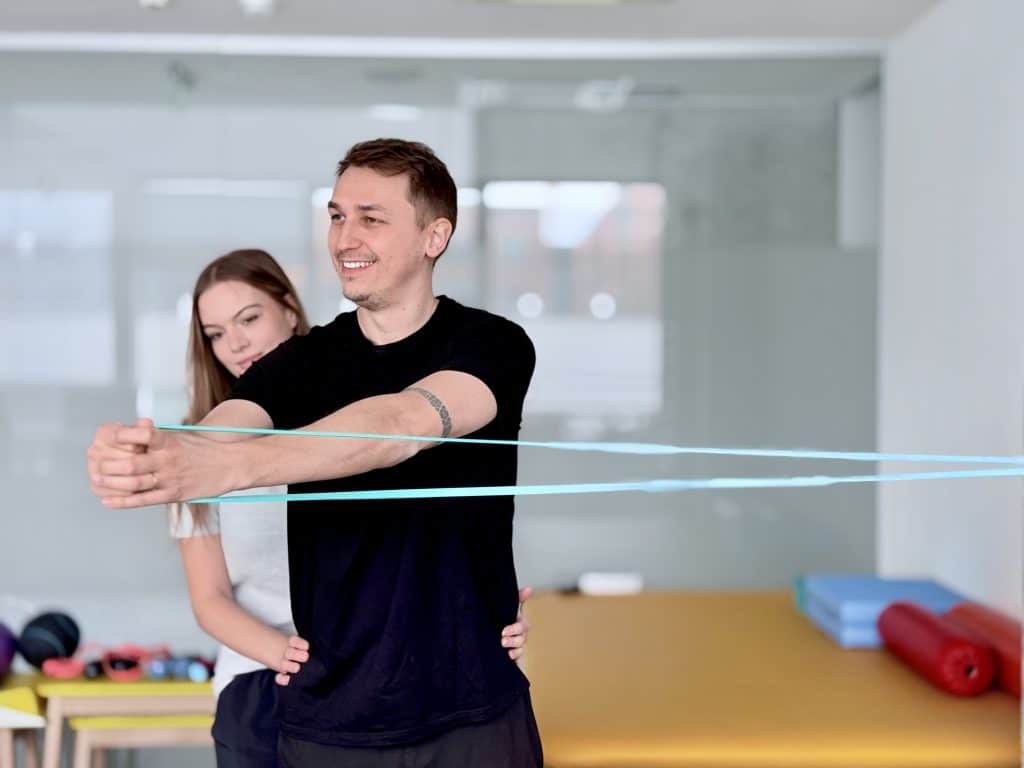
During this phase, resistance band exercises and stationary cycling are also introduced.
4. Psychological Aspects of Recovery
Rehabilitation is not only a physical process. Patients often experience a fear of movement (kinesiophobia), which can slow down recovery and limit progress.
The role of the physiotherapist is to provide support and reassurance, educate the patient, and gradually increase the level of physical activity and loading.
Regular evaluation of rehabilitation goals helps maintain motivation and confidence throughout the recovery process.
5. Return to Everyday Activities and Sports
The final stage of rehabilitation focuses on a safe return to everyday activities and sports participation.
It is important to emphasise that physical loading should be increased gradually, as returning to activity too early increases the risk of re-injury. The ultimate goal is to achieve a stable, functional, and pain-free knee over the long term.
How Long Does Recovery After Knee Surgery Take?
The duration of recovery depends on the type of surgical procedure performed. Recovery after minor procedures may take only a few weeks, while recovery following ligament reconstruction typically lasts between 4 and 6 months. After knee replacement surgery, recovery generally takes between 3 and 6 months.
An individualised approach and consistency in following the rehabilitation programme are among the most important factors influencing the speed and success of recovery.
Key Takeaways About Knee Rehabilitation
Rehabilitation after knee surgery is not a one-size-fits-all process – it must be individually tailored to each patient.
Professionally guided physiotherapy supports a faster recovery, reduces the risk of complications, and helps ensure long-term knee function and stability.
When Should You Contact a Physiotherapist After Knee Surgery?
If you want a safe and effective recovery after knee surgery, it is important to begin rehabilitation at the right time and under professional guidance.
Contact us to learn how an individualised physiotherapy programme can help you return more quickly to your everyday activities and sporting pursuits.