The shoulder joint is one of the most complex and mobile joints in the human body, which is why even minor injuries can significantly affect the everyday function of the arm.
Shoulder surgery is performed to eliminate the source of pain and repair damage to the tendons, joint capsule, bursa, or bony structures. However, successful functional recovery depends not only on the surgery itself, but also to a great extent on a well-structured rehabilitation program after shoulder surgery.
When Is Shoulder Surgery Recommended?
Surgery is most commonly recommended in cases of progressive and persistent shoulder pain, significantly reduced mobility, and loss of muscle strength.
Patients often experience difficulty with lifting the arm above shoulder level, performing rotational movements, and carrying out everyday overhead activities.
Which Conditions Most Commonly Require Shoulder Surgery?
The most common indications include shoulder injuries and degenerative conditions, such as:
- Rotator cuff injuries
- Shoulder instability
- Shoulder impingement syndrome
- Labral tears
- Advanced degenerative changes
Types of Shoulder Surgery
The most common procedures include arthroscopic and reconstructive surgeries, such as:
- rotator cuff surgery
- labral repair surgery
- subacromial decompression
- capsular release for frozen shoulder
Preparation for Surgery and the Role of Physiotherapy
Before surgery, a comprehensive diagnostic evaluation and surgical planning are carried out, with close collaboration between the surgeon and physiotherapist. A rehabilitation plan is established in advance to ensure the most effective recovery possible.
In many cases, preoperative physiotherapy is also recommended to strengthen the rotator cuff and prepare the shoulder for postoperative rehabilitation.
How Long Does Rehabilitation After Shoulder Surgery Take?
Rehabilitation begins in the early postoperative phase and may last 3 to 6 months following less complex procedures, or up to 12 months in cases involving more complex injuries.
The duration depends on the type of surgery, the extent of the injury, and the individual patient’s recovery process.
What Does Rehabilitation After Shoulder Surgery Involve?
Rehabilitation is carried out through four phases that follow the biological healing process of the tissues and support the gradual restoration of shoulder function.
1. Protective Phase (0–6 Weeks)
During this phase, the primary focus is on protecting the surgical site and preventing complications.
The goals are to reduce pain and swelling, maintain passive range of motion, and prevent loss of function.
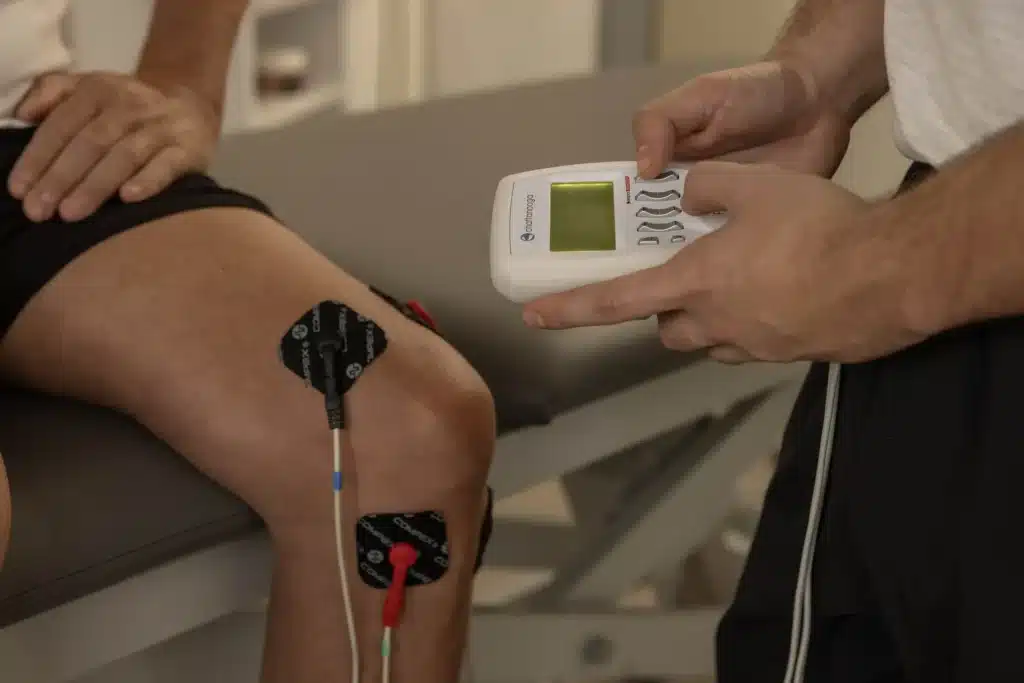
Treatment typically includes wearing a shoulder brace (immobilization), passive exercises, and physiotherapy, which may involve electrotherapy, lymphatic drainage, and thermotherapy.
2. Active Rehabilitation Phase (6–12 Weeks)
During this phase, the patient begins to actively participate in movement.
The goals include a gradual transition to active movements, restoration of range of motion, initiation of muscle strengthening, and reduction of pain during movement.
Treatment includes active-assisted exercises, as well as manual therapy, ultrasound therapy, and TECAR therapy, along with the gradual discontinuation of the brace.
3. Strengthening and Functional Rehabilitation Phase (3–6 Months)
The focus shifts to movement control and shoulder stability.
The goals are:
- full pain-free range of motion
- strengthening of the rotator cuff
- scapular stabilization
- return to functional activities
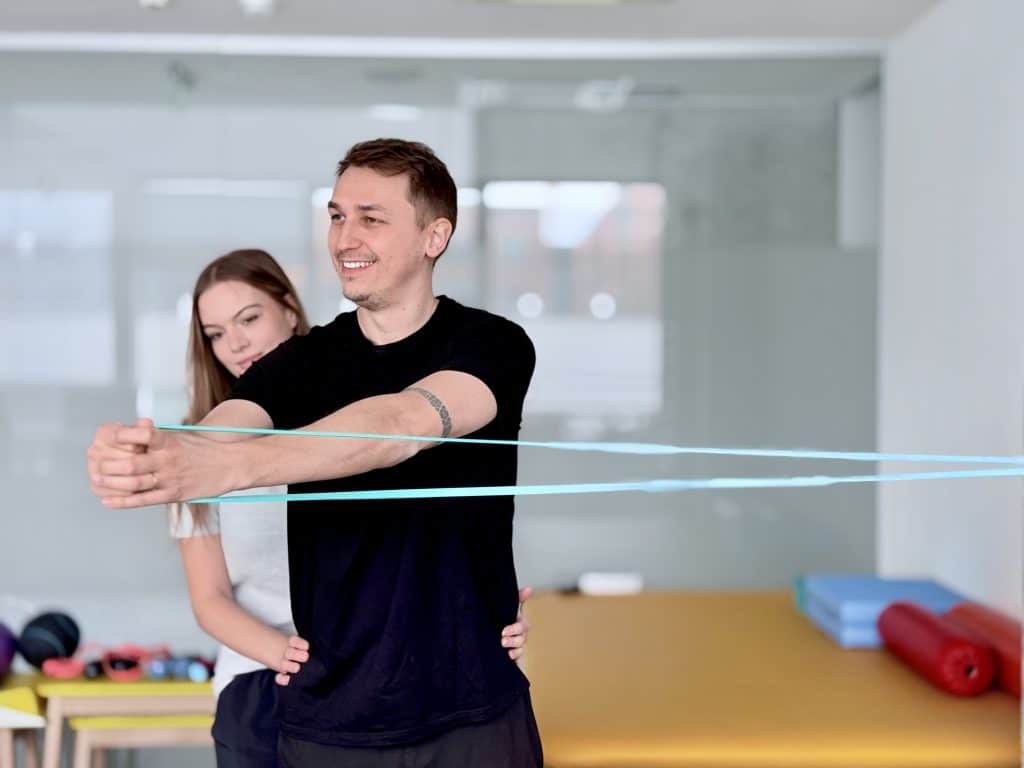
During this phase, patients perform strength and endurance exercises, coordination training, and simulations of daily activities and job- or sport-specific movements.
When indicated, additional treatment modalities such as shockwave therapy and magnetotherapy may also be used.
4. Return to Sports and Injury Prevention
The final phase focuses on the gradual return to daily activities and sports participation.
The goal is to achieve optimal strength and function while minimizing the risk of re-injury.
Emphasis is placed on sport-specific exercises and adaptation to individual functional demands.
Long-term success depends on maintaining shoulder strength, mobility, and stability.
What Is Important to Know About Shoulder Rehabilitation
Don't Delay Your Recovery!
If you are experiencing pain or limited mobility after shoulder surgery, timely rehabilitation can significantly accelerate recovery and improve long-term outcomes.
At our clinic, we create an individualized rehabilitation plan and guide you through every stage of the recovery process.
Contact us and start your rehabilitation on time.