Communication is an essential part of everyday life. It allows us to express our needs, wishes and emotions and build relationships with others. When a child has speech and language difficulties or cannot communicate effectively through speech, this may lead to frustration, misunderstandings and challenges in everyday situations.
In such cases, different forms of augmentative and alternative communication (AAC) may be used. One of them is PECS communication, or the Picture Exchange Communication System.
What is PECS communication?
PECS is a structured picture-based communication system intended for individuals who have difficulty communicating functionally through speech. The aim of the PECS method is to encourage a child to initiate communication independently and express their needs, wishes or interests.
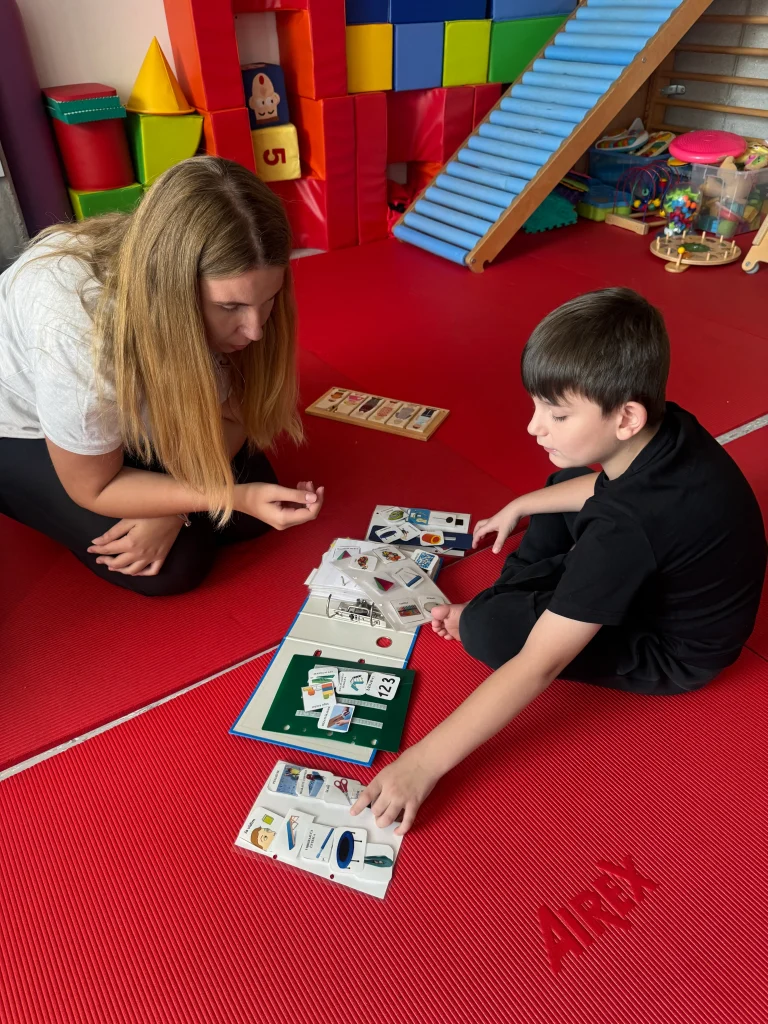
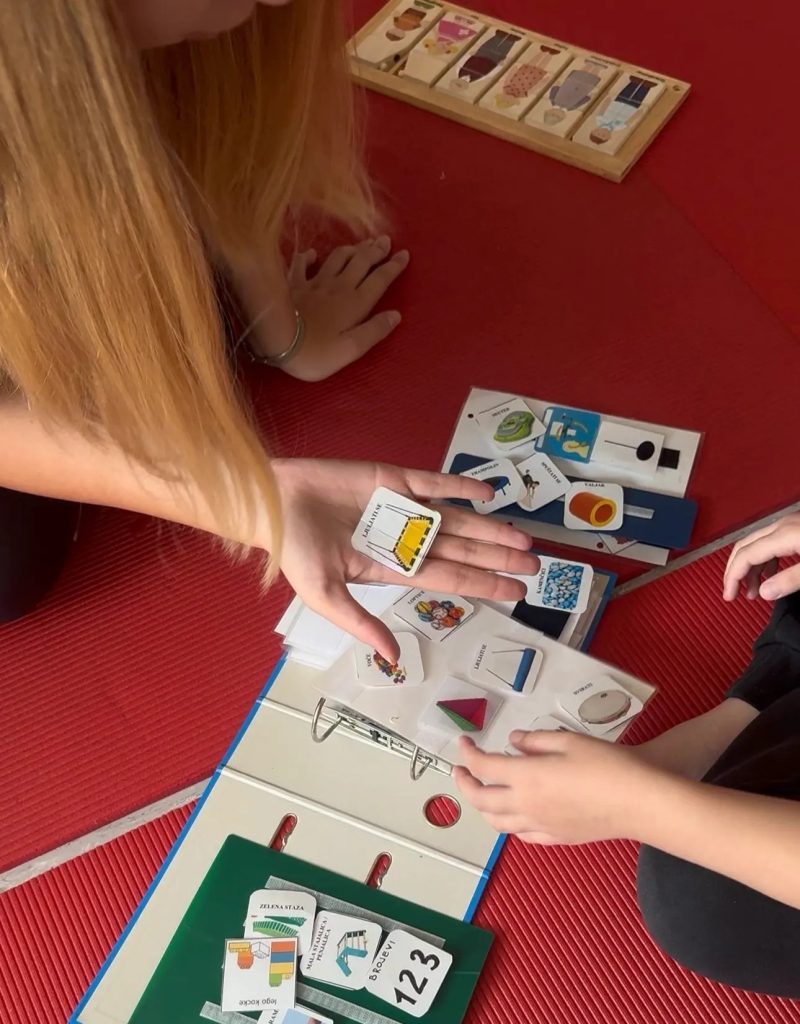
Rather than simply pointing to a picture, the child selects an appropriate picture symbol and gives it to a communication partner. For example, the child may use a picture to request a favourite toy, food, drink or activity.
In this way, the child gradually learns that communication has a clear purpose and can be used to influence their environment.
Because basic picture symbols do not require an electronic device, PECS communication can be used in different settings, including at home, in kindergarten, at school and during therapy. It is important that the system is introduced in a structured way with the support of a trained occupational therapist.
Who is PECS intended for?
PECS is most commonly used with children who have limited speech, do not use speech or cannot communicate effectively through speech.
The PECS method may be considered for children with:
- autism spectrum disorder
- developmental language disorder
- delayed speech and language development
- intellectual disabilities
- cerebral palsy
- genetic syndromes
- other developmental difficulties that affect verbal communication.
A diagnosis alone is not enough to determine whether PECS is the most appropriate communication system for a particular child. The child’s communication needs, interests, motor and visual abilities and current ways of communicating should also be assessed.
PECS is therefore not introduced in the same way for every child. The approach is adapted to the child’s individual abilities and needs.
How does a child learn to use PECS?
Learning PECS communication takes place through six structured phases. It begins with the simple exchange of one picture symbol for a desired object or activity.
The child gradually learns to:
- independently give a picture to a communication partner
- to use picture exchange in different settings by going to the communication book and then to the communication partner, with different people and over different distances
- distinguish between different picture symbols
- select the appropriate picture
- form a simple sentence, such as “I want the car”
- use PECS to answer the question “What do you want?”
- answer questions and spontaneously comment on what they see or experience.
The learning process takes place at an individual pace. Some children may need more time and support to master a particular phase, while others may progress more quickly.
The aim is not only to teach the child to use picture cards but also to help them apply this communication skill in different situations and with different people.
Can PECS delay speech development?
Parents often wonder whether picture-based communication will reduce their child’s need or motivation to speak. Available research does not indicate that augmentative and alternative communication prevents speech development. Some children may also show progress in verbal expression, although outcomes depend on their individual developmental abilities.
The purpose of PECS is not to replace speech or guarantee that speech will develop. Its purpose is to provide the child with a functional means of expression while speech is developing or when speech is not available as their primary form of communication.
When a child can clearly express what they want or need, frustration related to communication difficulties may also decrease.
Why is parental involvement important?
The success of PECS communication largely depends on whether the system is used outside the therapy setting. Children learn best when they have opportunities to communicate in different everyday situations, including playtime, meals, getting dressed, trips to the park and other daily routines.
Parents play an important role in creating opportunities for spontaneous communication. With guidance from an occupational therapist, they can learn how to give their child enough time to communicate, recognise attempts to initiate interaction and respond appropriately when the child exchanges a picture.
In this way, PECS gradually becomes part of everyday life rather than an activity used only during therapy.
When should you consult an occupational therapist?
If a child has difficulty expressing their needs, rarely initiates communication independently or frequently becomes frustrated because they cannot make themselves understood, an occupational therapist can assess their communication abilities and participation in everyday activities.
Based on the assessment, the occupational therapist can determine whether PECS communication may be appropriate for the child or whether another form of augmentative and alternative communication would better meet their needs.
If you would like to find out whether picture-based communication could help your child, contact us to arrange an occupational therapy assessment and receive individual recommendations.